Festivals of Visāka 2026
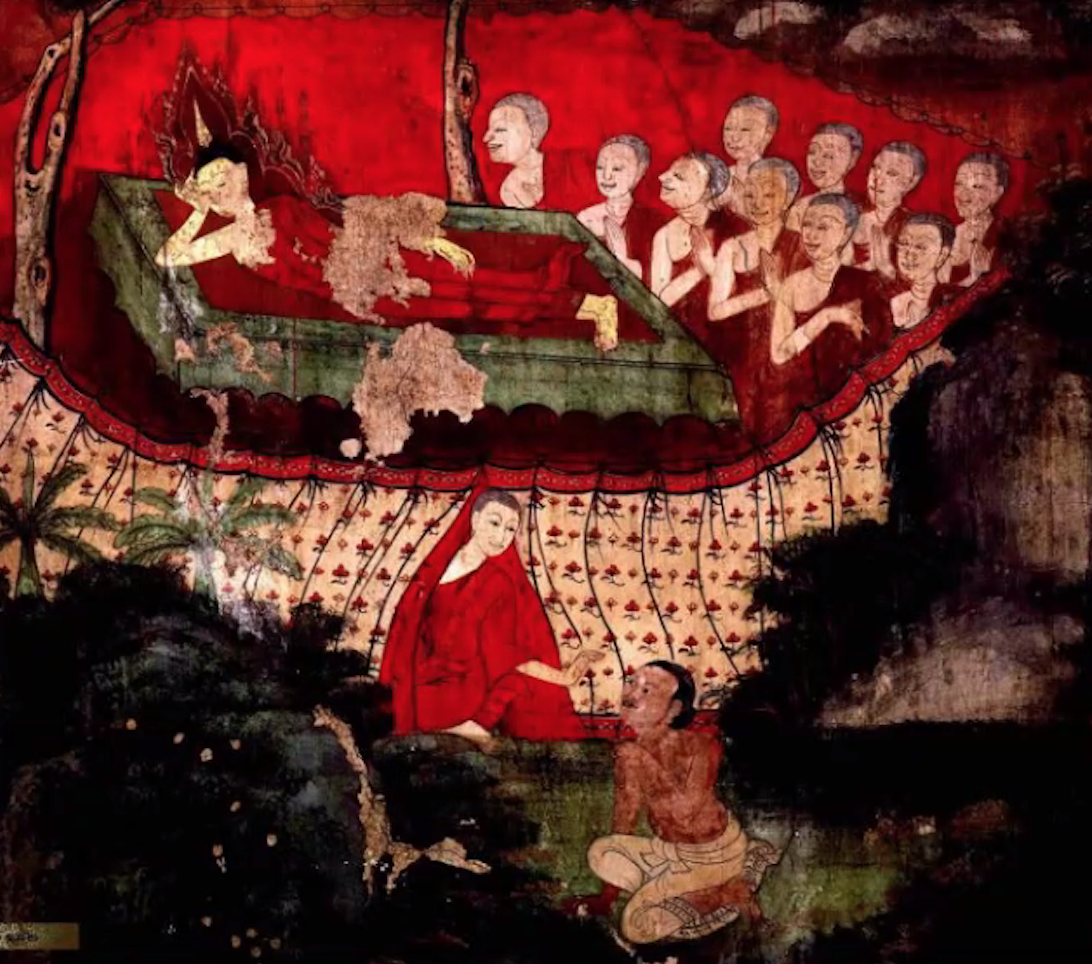
Buddhaisawan Chapel, National Museum, Bangkok C19th Century
Visakha is the 6th Month of the Thai-Lao Lunar calendar or the 8th Month of the Lanna system and is one of the busiest monthes in terms of the number of festivals that occur during this time around Thailand. However due to the fact this year is a lunar leap year, the festival of Visakha Puja is later than normal.
For this short article I would like to focus on three festivals in particular that are celebrated in Central Thailand and one specific to the North East and Laos. Throughout I will quote extracts of the Buddha’s life story from the book “The Life of the Buddha: According to Thai Temple Paintings” (1957) by Kurt Leidecker and Somdet Phra Vajirayanavom, third abbot of Wat Bowon and 13th Supreme Patriarch of the Ratanakosin period. Each section is written by different important monks of that era and I will give their names accordingly.
The festivals I will focus on this year are the Royal Ploughing ceremony, Visakha Puja, Attami Puja and Boon Bang Fai. These are by no means the only festivals and the information will be brief, with the intention to expand and explain more in separate posts in coming years.
The Royal Ploughing Ceremony

Picture from Wat Samphandhawongse
The Royal Ploughing Ceremony took place at the Sanam Luang, royal field in front of the Grand Palace in Bangkok on Wednesday the 13th May 2026. The tradition is very ancient and is an important event in the 12 Royal Festivals as well as a pivotal moment in both the Ramakien and in the life of the Buddha which I will quote below:

Picture from Wat Samphandhawongse (Wat Koh) Bangkok, circa 1870 A.D.
Prince Siddhattha’s Shadow Does Not Move
“Here an event is illustrated which occurred when Prince Siddhattha was seven years old. It took place at the annual plowing festival.
King Suddhodana had a well-appointed tent erected in a little enclosure under a spreading rose-apple tree. He went off to conduct the ceremony and even the servants absented themselves in order to get a glimpse of the festivities. Thus left alone the young Prince experienced for the first time a strange delight and peace of mind as he sat cross-legged and went into deep trance while controlling his breath. Such was the depth of his beatitude which was a foreboding of his eventual Enlightenment that a strange phenomenon took place.
The time was way past noon, in fact, the sinking sun already cast long shadows. Yet the shadow under the rose-apple tree remained fixed as if the sun were directly overhead.
This the attendants noticed as they returned from the ceremony. They forthwith told the King who returned immediately and interpreted the phenomenon as a sign of the exalted nature of the Prince’s destiny and raised his hands in salutation.”
Phra Prasiddhi Viriyagun
Wat Dusitaram, Thonburi.
Visakha Puja
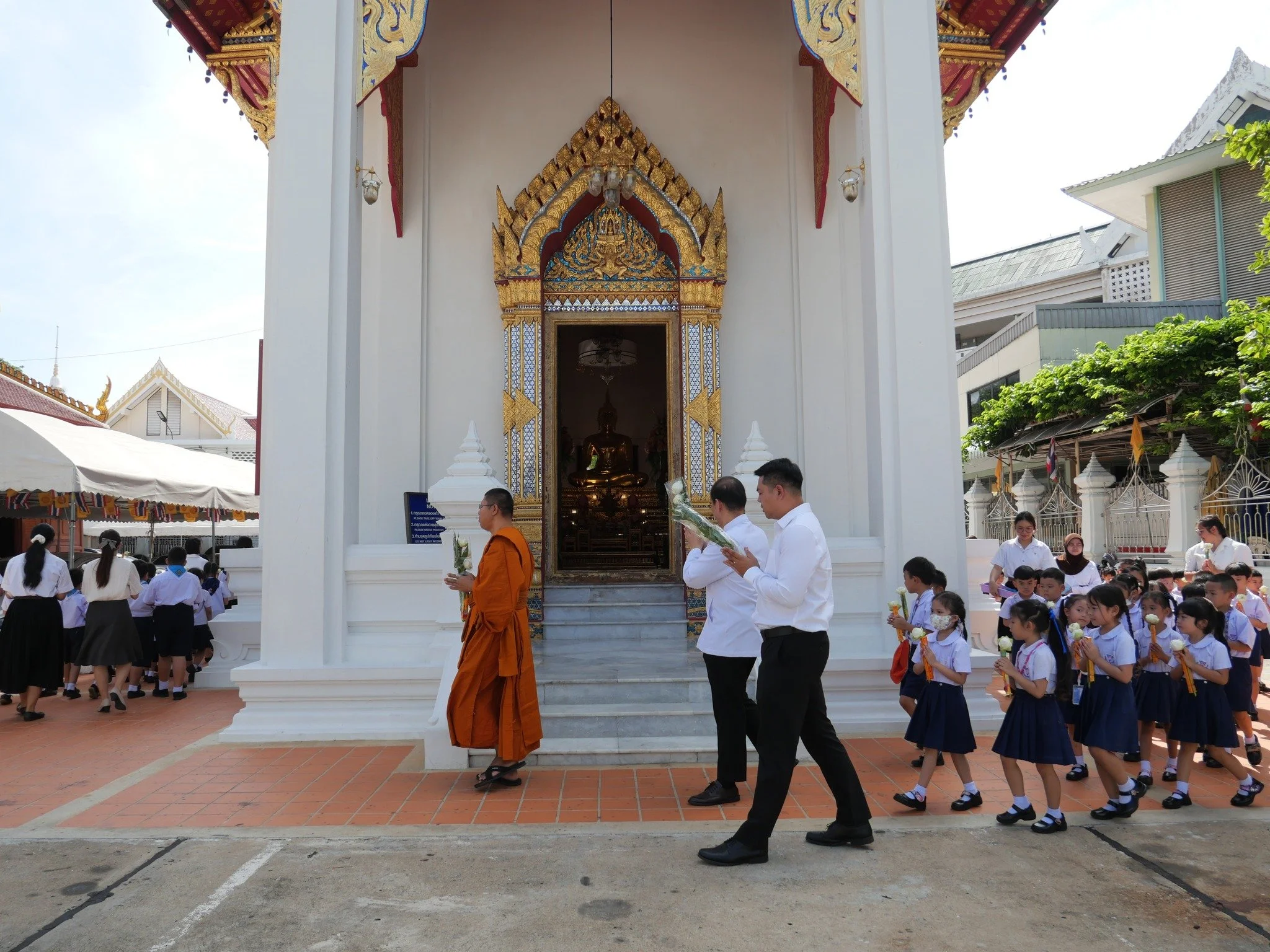
Wat Parinayok, Bangkok
Visakha Puja Day will take place across the majority of Buddhist communities on Sunday the 31st May 2026. The tradition is that the full moon of the month of Visakha marks the birth, enlightenment and the death of the Lord Buddha. There are a variety of different activities, but the most common including making offerings to monks, visiting temples and circumambulating holy places holding lotus flowers, candles and incense. Visakha (ไพศากขย) is also mentioned as one of the 12 Royal Festivals in the Palace Law section of the Three Seals Law although there are no details as to what the ceremony looked like it does suggest it was celebrated at least from the early Ayutthaya period.
For this section I will quote a small part of the life of the Buddha on the moment of “Calling the Earth to Witness:”
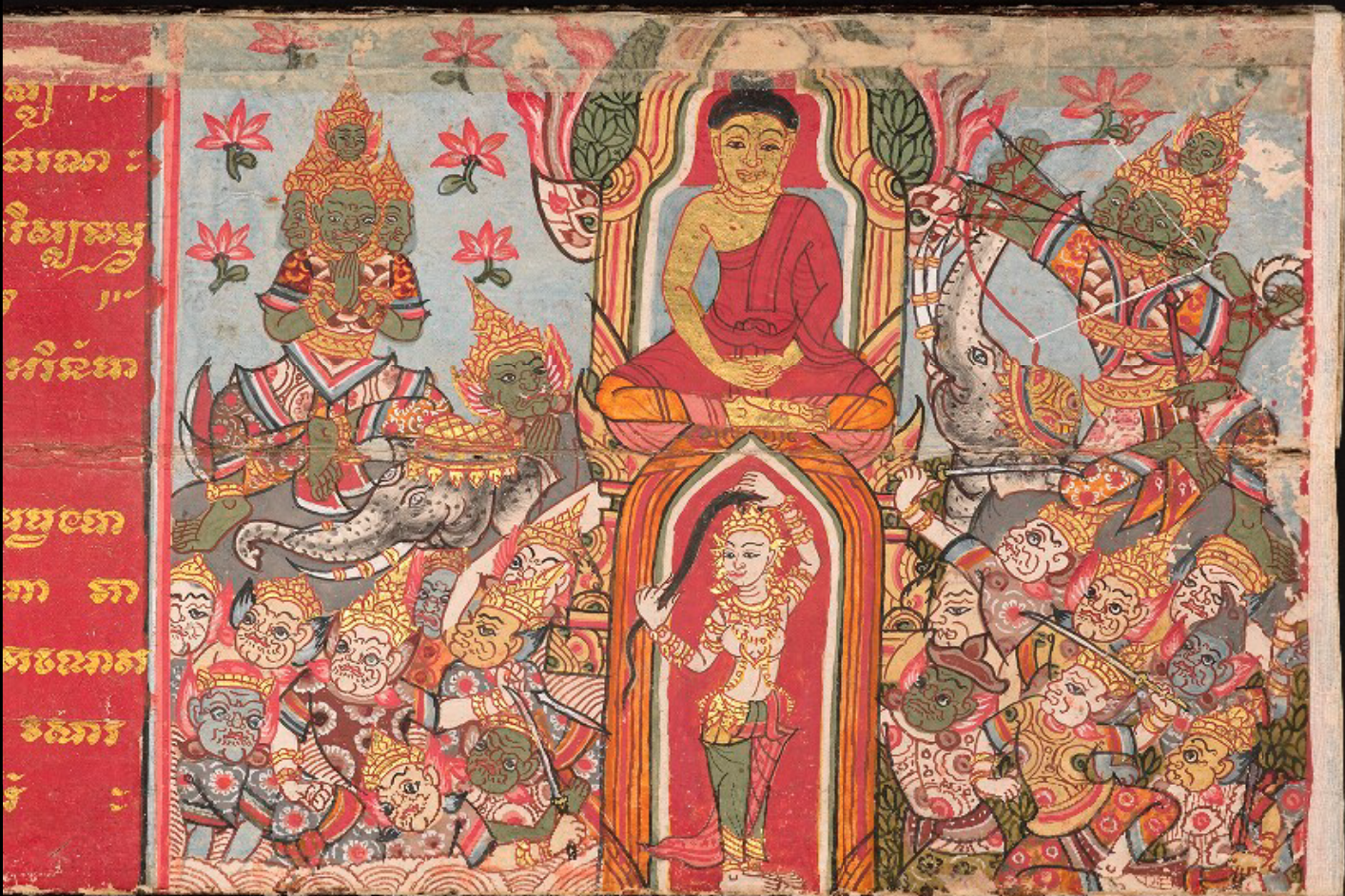
Bodleian Library MS. Pali a. 27 (R) https://digital.bodleian.ox.ac.uk/objects/59371853-5ff2-436e-9714-672986c6a6d6/surfaces/c1ccbf3f-f95d-4165-a021-f2bfdb791511/#
“…When the all-powerful Mara began to notice that Gotama was slipping away from his domination, he was advancing on him with his army, chariots, horses, elephants and all sorts of weapons, challenging Gotama on his throne. Then Gotama gathered up all of the ten virtues of his previous life, remained undisturbed and resolved to call the earth to witness his purity. He thus threw his virtues, as it were, in the battle against Mara.
Exercising her supernatural powers in the service of the good Dhamma, the Goddess of the Earth, in the shape of a woman, standing below the throne wrung out her hair, loosening a great flood which brought the army of Mara to nought before sunset. Henceforth Gotama was free from any disturbances. He exerted power of his mind until he attained Enlightenment and became the Buddha on the full moon night of Visakha day.”
Phra Thaksinvaranayaka
Wat Udomdhani, Nakorn Nayok
Attami Puja
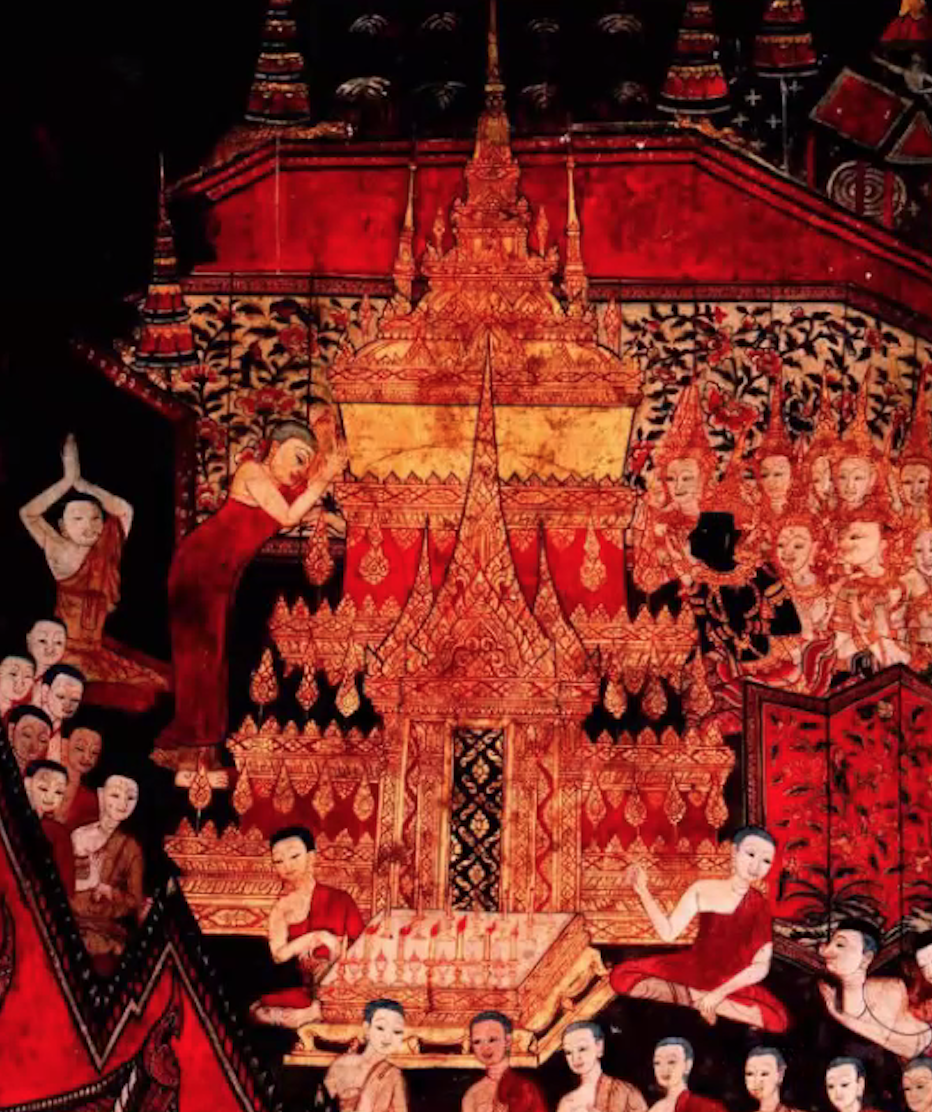
Buddhaisawan Chapel, National Museum, Bangkok C19th Century
Attami Puja (วันอัฏฐมีบูชา) is on the 8th waning moon, that is the following holy day (Wan Phra), a week after Visakha Puja and should fall on Monday the 8th June this year. This marks the cremation of the Buddha’s body and is not celebrated in every temple, though like Visakha Puja there is a specific chant for the event composed by King Mongkut (Rama IV). This chanting can be found in the standard yellow chanting book called Mon Pitee used across Thailand, for a romanized version look at the following website and scroll down to page 160: (https://suvacobhikkhu.wordpress.com/pali-chanting/).
Some specific temples also have a tradition of burning a model of the Buddha on this day such as Wat Borommathat Tung Yang, Laplae District, Uttaradit Province or at Wat Mai Sukonthararam (วัดใหม่สุคนธาราม) in Nakhon Pathom.

From the Buddhai Sawan Throne Hall of the National Museum in Bangkok.
Kassapa at the Buddha’s Pyre
“On the eighth day of the waning moon of the sixth month, or seven days after the Buddha’s Parinibbana, the King of the Mallas of Kusinara, together with his subjects, brought the Buddha’s body to a shrine called Makutabandhana where the cremation was to take place.
That day Phra Maha Kassapa or Kassapa the Great came and brought along 500 disciples from Pava city… The monks were perplexed, the Arhants speculated about the impermanence of the human body, but those who were not enlightened at all cried out with grief. Kassapa calmed them all on the way and when they arrived at the cremation site he went clockwise around the coffin three times, made his obeisance and pondered about his gratitude and faithfulness to the Buddha.
He swore that if his homage were acceptable the Buddha’s feet should come out of the coffin as a sign. No sooner had he finished when the Buddha’s feet came through the golden coffin. Kassapa then asked the Buddha’s pardon and the feet were withdrawn. The funeral pyre was lit and burned for several days.”
Phra Maha Phisit Suchitto
Wat Prayurawongse, Thonburi
Boon Bang Fai
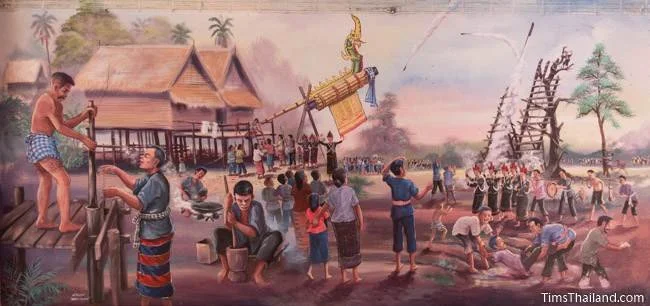
https://www.timsthailand.com/boon-bang-fai/ Mural from Khon Kaen
Finally a tradition for this month found in the North East and Laos is Boon Bang Fai which is a festival for calling for rain where villages and temples come together to compete with building giant bamboo rockets. Like many of the 12 festivals of the Isaan and Laos (Heet Sib Song), there is a specific local Jataka story explaining aspects of this tradition. In this case the Jataka revolves around the bodhisatta in his birth as a toad who becomes a handsome prince and then leads an attack on Indra when he fails to provide rain. In this battle the toad prince calls upon bugs such as ants and bees as his army and shoots bamboo rockets to defeat Indra and his devas. Models of these animals were traditionally made as well as the usual merit making activities and parades, with the most famous festival being in Yasothon on the 9th and 10th of May this year.
