On this coming Tuesday 3rd March 2026 Thailand and many other Buddhist countries will celebrate Magha Puja day. This marks the full moon day of the month of Magha and this short article will explore some of the meanings and ceremonies associated with Magha Puja as well as some festivals that typically occur on the same day too.
Māgha Pūjā
Magha Puja is the full moon day of the third lunar month, following the Thai and Lao numbering method and the fifth month in Northern or Lanna Thai method.
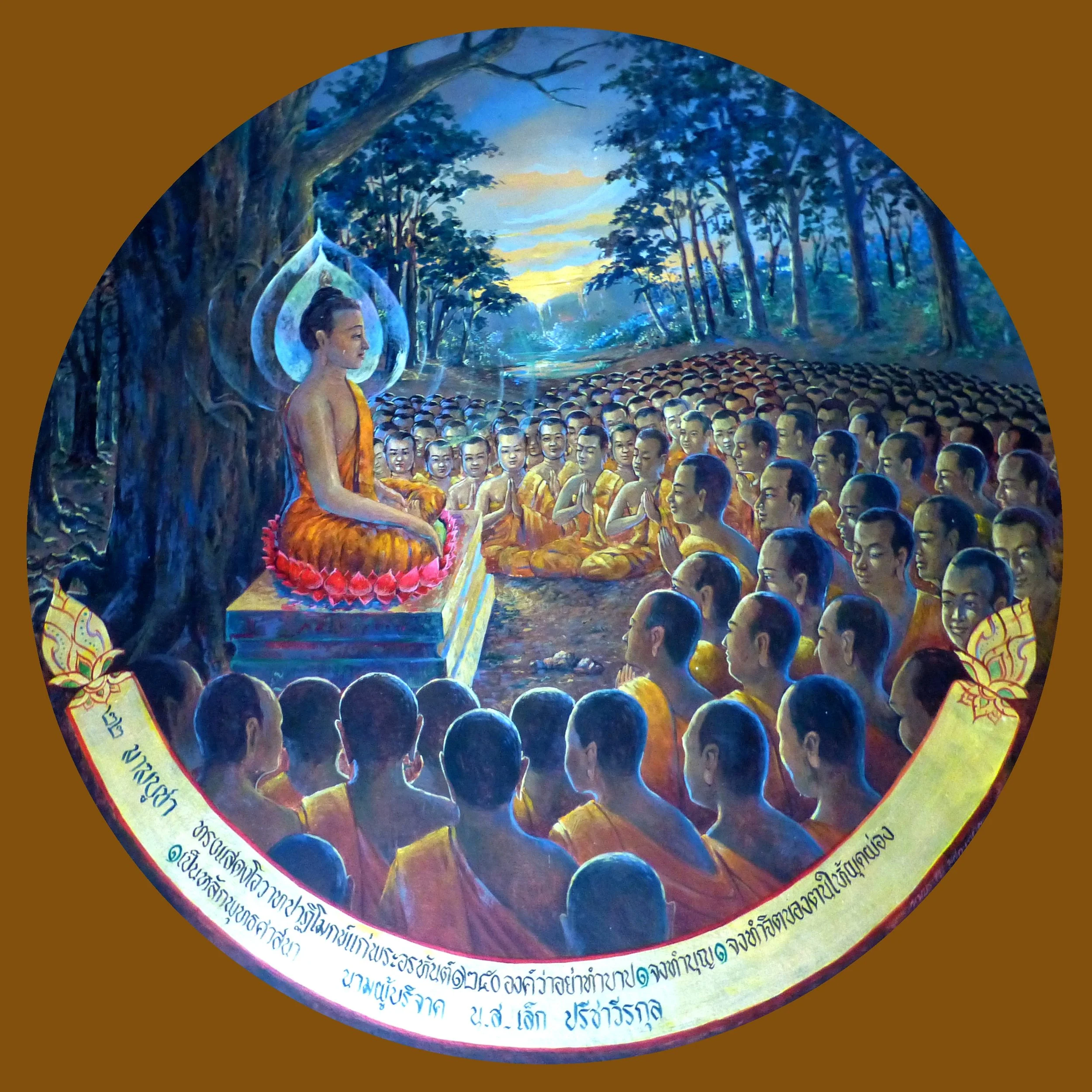
This date celebrates an auspicious event that happened during the first year after the Buddha’s enlightenment. On this full moon day, a gathering of 1,250 arahants occured, without being asked and all of them had been ordained by the Buddha himself. At that time the Buddha taught the Ovādapātimokkha, the fundamental rules which are taught by every Buddha, whether of the Past, Present or Future:
“Patient acceptance is the ultimate fervor.
Extinguishment is the ultimate, say the Buddhas.
No true renunciate injures another,
nor does an ascetic hurt another.
Not to do any evil;
to embrace the good;
to purify one’s mind:
this is the instruction of the Buddhas.
Not speaking ill nor doing harm;
restraint in the monastic code;
moderation in eating;
staying in remote lodgings;
commitment to the higher mind -
this is the instruction of the Buddhas.”
Magha Puja Practices
There are a number of different ceremonies and traditional practices done on this date which vary in terms of location and history.
The most common practices for Magha Puja found across Thailand are the ceremonies promoted by King Rama IV in the middle of the 19th century. These include recitation of verses he composed and the circumambulation of temple structures such as Chedi (stupa) and Uposot whilst holding candles, incense and lotus flowers. This is usually done in the evening and is followed by typical acts of merit-making and sermons on Magha Puja.
In the North of Thailand this was also the typical time for worshiping the relics of the Buddha. Famous relics would be removed from chedi and washed and worshiped and it was also an auspicious time for ordinations.
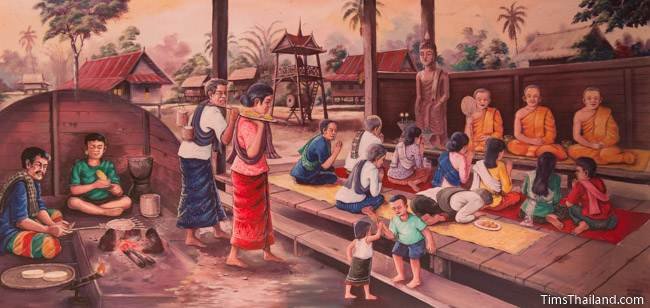
In the North-east and in Laos this day is celebrated as Boon Khao Ji where grilled sticky rice dipped in eggs are offered to the monks in imitation of a story from the Dhammapada.